Which surface are you leaning toward for your patio?
The compare pages set each of these against the others.
No votes yet. Yours will be the first. · saved on this device
Loading...
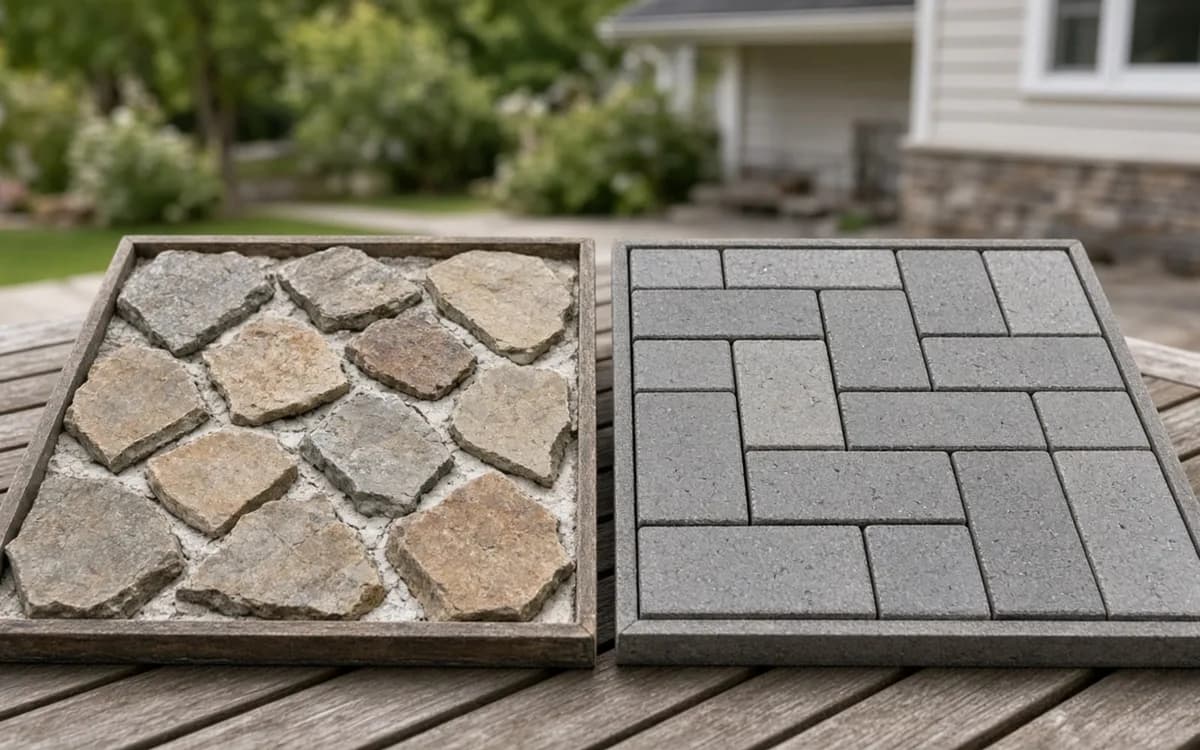
Patio Scopebook · Concrete pavers vs Natural stone
Concrete pavers cost less, come in consistent sizes and can be replaced from stock; natural stone costs more, varies in every piece and never fades or wears out when laid at the right thickness. Stone wins for older houses, long ownership and regions near a quarry. Pavers win for budgets, complex patterns and anywhere replacement units may be needed.
The two surfaces are laid the same way, dry-set on sand over a compacted base, and fail the same way, from a bad base. What differs is what you pay for the surface, how it looks on day one and year twenty, and how easy it is to get a matching piece when one breaks. The verdict above summarises the trade; this page works through the scenarios, the ten-year cost, climate, resale, mistakes and bid comparison.
Stone pricing is unusually regional, which makes national comparisons unreliable. A bluestone patio in Pennsylvania and one in Arizona are different products at different prices. The section on region explains how to read the site's $12 to $30 per square foot stone range against Lawn Love's $8 to $24 per sq ft for pavers.
Concrete pavers are cheaper, uniform and available everywhere; natural stone costs more, looks like nothing else and lasts indefinitely when laid at the right thickness. Regional stone narrows the price gap sharply.
| Factor | Concrete pavers | Natural stone |
|---|---|---|
| Upfront cost | $8 to $16 per sq ft installed (LawnStarter) | $12 to $30 per sq ft, up to $50 (LawnStarter; HomeAdvisor) |
| Lifespan | 30 to 50 years; color may fade on budget lines | Indefinite; color permanent |
| Maintenance | Joint sand, optional sealing | Joint sand or mortar repair; some stones stain or flake |
| Appearance | Consistent, patterned, many shapes | Variable, natural, irregular or sawn |
| Climate fit | Freeze-thaw rated products available | Bluestone and granite handle frost; travertine suits heat; some sandstone spalls |
| Install time | 4 to 10 days | Longer; heavier units, more fitting and cutting |
| Resale | Solid; NAR's 95% figure was a concrete paver patio | Strong appeal; NAR's 100%-recovery walkway was flagstone |
| Best for | Budget, large areas, tight patterns | Front-of-house, older homes, small areas where quality shows |
Natural stone wins where it is seen up close and where the house asks for it: a front walkway, a small terrace off a period home, a seating area where the material is the design. NAR's 2023 report found a $9,000 flagstone front walkway with planting recovered its full cost, the best return of any outdoor project it measured. Bought from a regional quarry, stone can land within a few dollars per square foot of premium concrete pavers.
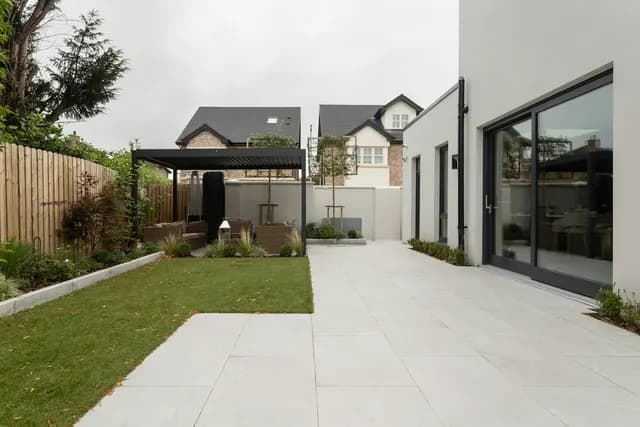
Concrete pavers win on large areas, tight budgets and anywhere a precise pattern or a driveway-rated thickness is needed. They are also the pragmatic choice when the installer's stone experience is thin; stone laid too thin or on a moving base fails in ways concrete pavers do not. A common compromise is a concrete paver field with a natural stone border or a stone landing at the door, which spends the stone budget where eyes fall.
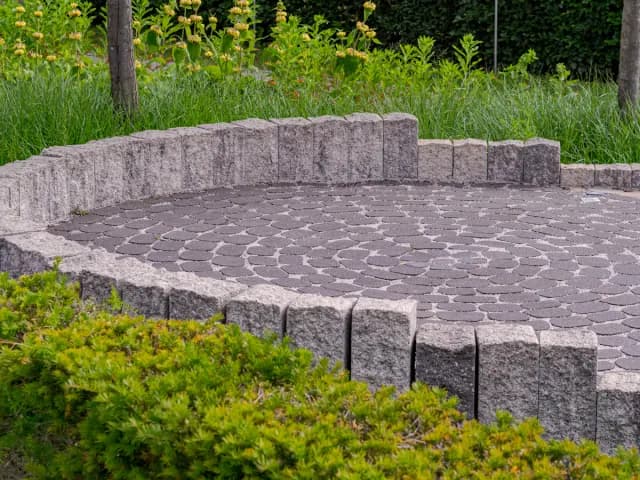
Stone is right when the house and garden already have stone, brick or an older character that molded concrete looks out of place beside. It is right for homeowners planning to stay long enough that fading and wear would show on concrete pavers, and for patios that will be seen up close from a kitchen or living room every day. It is right where a regional stone is quarried nearby, which brings its installed price close to premium pavers.
It is also right for irregular, organic layouts. Flagstone with wide planted joints, stepping stones through a garden and a terrace stepping down a slope all suit stone's variation. Sawn bluestone in a running bond suits formal spaces. The materials guide lists which stones handle frost; here it is enough to say that a dense stone laid at an inch and a half or more outlasts the house.
Pavers are better where the budget is fixed and the area is large, where the pattern is complex, and where the patio may be cut into later for utilities. They are better for driveways and any vehicle area, since 80 mm units are made for it and stone thick enough for cars is expensive. They are better for tight tolerances: a level dining surface, a pool deck, a ramp. And they are better wherever a matching replacement unit may be needed in five years.
Uniformity is the practical advantage. Every paver is the same thickness, so the bedding layer is a simple screed; irregular stone must be bedded piece by piece, which is where stone labor goes. The CMHA production data showing a -9.9% change in 2023 does not reflect any performance problem; concrete pavers remain the volume product because they suit most yards at most budgets. The paver patio page covers the specification.

A 400 square foot paver patio in a mid-cost market installs at roughly $6,800; the same area in regional sawn stone at about $9,000 to $10,000; in shipped premium stone at $12,000 or more. Over ten years both need joint sand topped up and perhaps a corner relaid. Concrete pavers may be sealed once or twice at HomeGuide's $1.50 to $3.25 per sq ft to hold color; dense stone is usually left unsealed. Maintenance totals are similar, a few hundred dollars each.
The difference is therefore almost entirely upfront: a third more for regional stone, double for shipped stone. Against that, stone does not fade, so a twenty-year-old stone patio looks like a two-year-old one while a twenty-year-old pigmented paver has softened noticeably. Whether that is worth $3,000 to $6,000 is a preference, not a calculation, and Angi's project benchmark of $2,029 to $6,088 shows most homeowners land on the paver side.
Stone is heavy and freight is a large share of its cost. Bluestone quarried in Pennsylvania and New York is a mid-priced surface across the Northeast and an expensive one in the Southwest. Arizona and Colorado flagstone is the reverse. Texas and Indiana limestone, Tennessee fieldstone and Pacific Northwest basalt each have a home market. Travertine, largely imported, is priced similarly across the Sun Belt where it is most used.
Before pricing stone, ask a local supply yard what is quarried within a day's drive and get an installed figure from a professional for that stone specifically. The site's regional page and the paver cost page give the paver baseline; the stone premium over it is the number that varies by a factor of two across the country.
| Region | Local stone | Typical premium over pavers |
|---|---|---|
| Northeast | Bluestone, fieldstone | 20 – 40% |
| Southeast | Tennessee flagstone, limestone | 30 – 50% |
| Midwest | Indiana limestone, Wisconsin stone | 30 – 60% |
| Southwest | Arizona flagstone, travertine | 20 – 50% |
| Pacific Northwest | Basalt, Montana stone | 30 – 60% |
The NAR 2023 Remodeling Impact Report scored a flagstone walkway and planting upgrade at 100% cost recovery, the highest outdoor figure in the report, and a paver patio at 95%. Both are strong. The stone figure reflects a modest project on a visible front approach; it should not be read as stone beating pavers everywhere.
Appearance over time is where stone earns its price. Pigment in concrete pavers fades slowly in sun and the surface wears to show aggregate; sealing slows both. Stone changes color only with moss or iron staining, both removable. If the patio will still be yours in twenty years and you care how it looks then, that is the case for stone. If you expect to sell within ten, pavers present just as well.
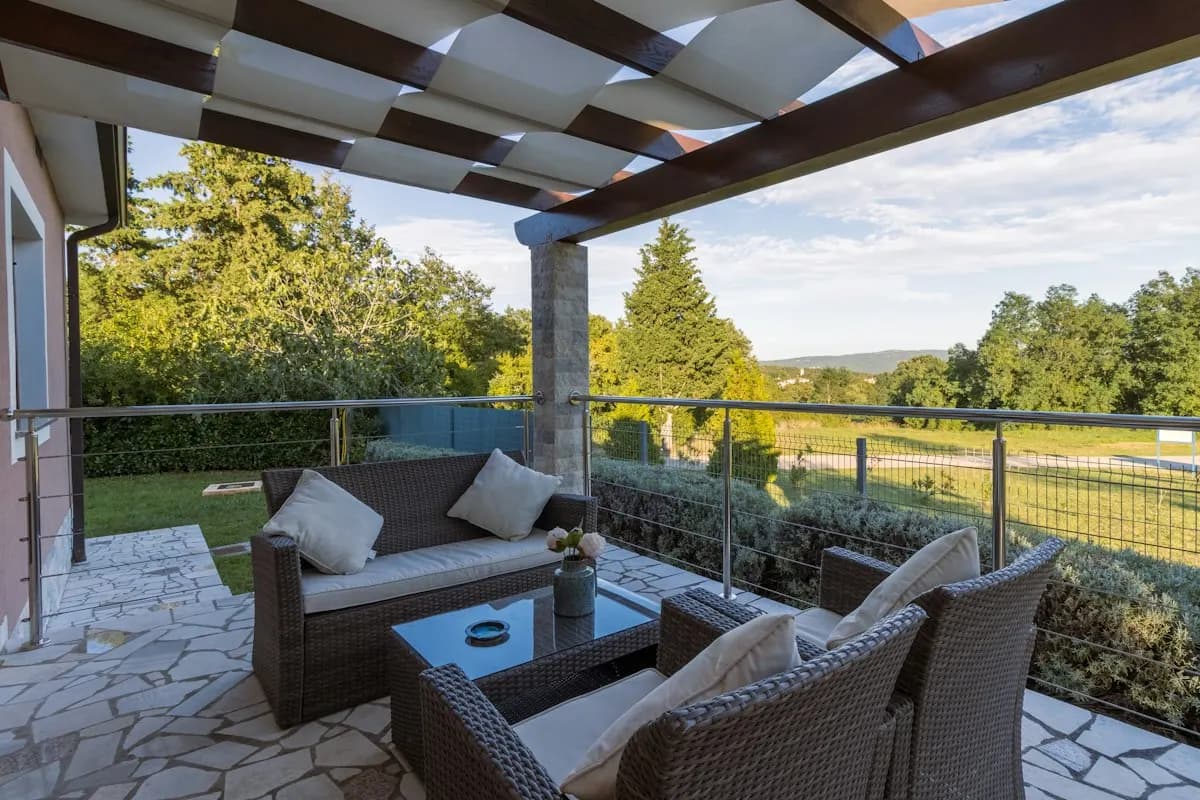
Stone failures are almost always thickness and bedding. Thin flagstone cracks under a chair leg; irregular stone bedded on a thick sand layer to level it rocks and breaks; porous stone in frost spalls; wide joints filled with ordinary sand wash out. Specify thickness, ask for bedding on a screeded inch of sand over a proper base, and use polymeric or planted joints. Paver failures are the familiar ones: thin base, missing edge restraint, wrong sand.
Both share the mistake of choosing from a small sample. Stone varies by pallet; concrete pavers vary by production run. Ask to see a full pallet of stone or a laid section of the paver before committing, and insist all material comes from one lot. The glossary entries on bedding layer and efflorescence explain two things homeowners often mistake for defects.
Compare the base first; it should be identical. Then compare thickness: pavers at 60 mm, stone at 1.5 inches or more for irregular, one inch gauged only if the base is precise. Then compare the joint treatment, the border, and how cuts at the house and edges will be handled, since stone cuts cost more. Ask whether the stone price is for a named quarry and grade and whether the yard has stock, because stone lead times run weeks.
Finally, ask each professional for the installed price of the other option as well. Many hardscape contractors will price both from the same layout, and the difference on your yard is more useful than any national ratio. The estimate request can carry both options in one brief.
Homeowner polls
The compare pages set each of these against the others.
No votes yet. Yours will be the first. · saved on this device
No votes yet. Yours will be the first. · saved on this device
Bluestone and granite handle freeze-thaw well when laid at 1.5 inches or thicker on a compacted, free-draining base. Dense sandstones are acceptable; soft or layered sandstone and some limestones absorb water and flake. Travertine is a hot-climate stone and can spall in hard freezes unless it is a dense grade. Ask the supplier for absorption data and the installer for local examples.
Budget through-mix pavers lose surface color over years in strong sun as the cement paste wears and exposes aggregate; the effect is a lighter, more uniform tone rather than a blotch. Face-mix pavers with a dense pigmented top layer hold color far longer and cost a few dollars more per square foot. In the South and Southwest, that upgrade is worth it; in shaded northern yards it matters less.
Dense, properly graded travertine can be used in freeze-thaw climates, but the softer, more porous grades common at the low end spall after a few winters. Ask for a grade rated for freeze-thaw exposure, lay it on a free-draining base, and expect the price to rise. In the South and Southwest it is a strong, cool-surfaced choice.
Yes, mortared, if the slab is sound, drains and has expansion joints that can be carried through the stone. It is the usual way thin stone is installed. The stone then inherits the slab's cracking behavior, so an already cracked slab should be removed or the stone dry-set on a new base instead.
Stone varies by quarry, grade, thickness, whether it is sawn or irregular, and freight distance, while a concrete paver is a catalog item. Two stone bids may be pricing different products. Ask for the quarry, grade and thickness on each bid before comparing price.
Some do; tumbled, textured and multi-size paver lines are designed to soften the molded look and often pass at a distance. Up close, sharp edges and repeating molds are visible. Clay brick pavers are a middle option for older houses, with fired-in color and a traditional look at a price between concrete and stone.
Order five to ten percent extra at installation and store it out of the weather. Stone from the same quarry a decade later will be close but rarely identical. For concrete pavers, keep a few dozen units from the original lot; manufacturers change colors and discontinue lines frequently.
Polished and honed stone can be; thermal, flamed, cleft and natural-split finishes are not. Ask for the finish by name and test a wet sample. Bluestone with a thermal finish and cleft flagstone are the usual choices for patios and steps. Concrete pavers are textured by design and are rarely slippery.
 ComparisonConcrete pavers vs Poured concrete
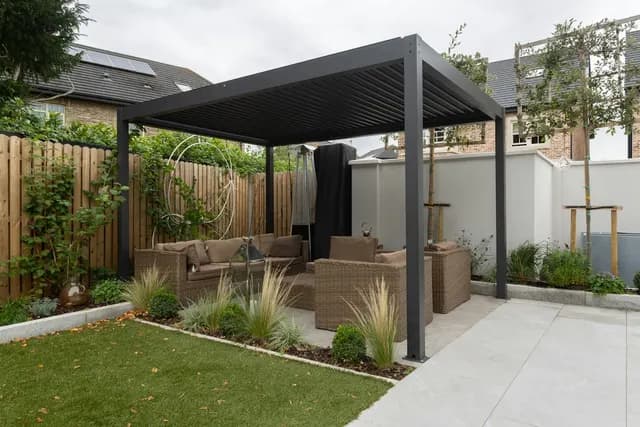
Poured concrete is the cheaper patio at about 60 percent of a paver price and installs in days, but it cracks where the ground moves and cannot be spot-repaired.
 ComparisonPermeable interlocking pavers vs Conventional pavers
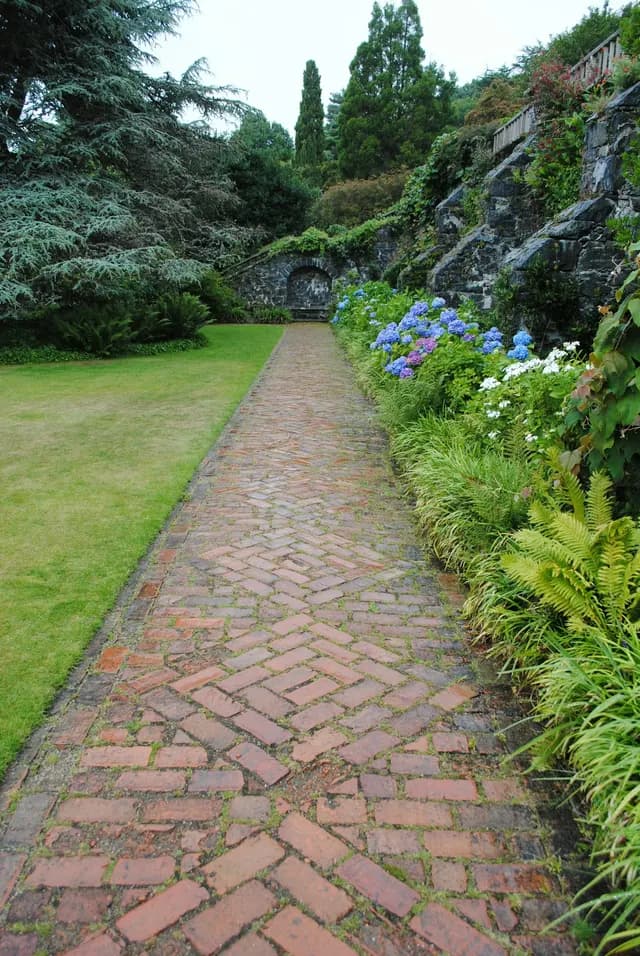
Permeable pavers pass rain through stone-filled joints into a deep open-graded reservoir, replacing the drain a conventional patio needs and often satisfying stormwater rules.
 ComparisonSegmental concrete block wall vs Pressure-treated timber wall
A pressure-treated timber wall is the least expensive way to hold a low slope and can be built in a day, but it rots at the soil line in fifteen to twenty-five years.
 ComparisonNatural gas or propane fire feature vs Wood-burning fire feature
A gas fire feature lights instantly, makes no smoke or ash, is allowed where wood is banned and can sit closer to seating, but costs more to install because of the line and permit.
 Service guidePaver Patio Installation
Paver patio installation is the excavation, compacted stone base, bedding layer, laid pavers, edge restraint and joint fill that together create a level, drained outdoor surface.
 Service guideRetaining Wall Construction
Retaining wall construction turns a grade change into stable, usable ground with a footing, a wall of segmental block, stone, timber or poured concrete, and the drainage stone and pipe behind it.
 Service guideFire Pit & Fireplace Install
Fire pit and fireplace installation covers built-in wood or gas fire pits, masonry or prefabricated outdoor fireplaces, the non-combustible surface around them, gas or electrical lines and the clearances local rules require.
 Service guideWalkways & Driveways
Walkway and driveway work covers paths from the street or driveway to the door, garden paths, and vehicle surfaces in pavers, permeable pavers, concrete or stone.
 Service guideOutdoor Living Spaces
Outdoor living space planning coordinates patio, seating, cooking, shade, lighting, fire, paths, walls and planting into one plan that can be built at once or in phases.
 Free toolPatio cost calculator
Size, material tier and complexity in, a realistic budget range out.
 Free toolHardscape planning quiz
9 questions that show what you already know and what to check next.
 Free toolHardscape polls: how other homeowners are deciding
See what other planners chose and add your vote.
Tell us the size, the condition of what is there now, and what you want to change. Patio Scopebook passes your request to independent local professionals, who reply with written, no-obligation estimates. The service is free to use.