Would you consider permeable pavers?
No votes yet. Yours will be the first. · saved on this device
Loading...

Patio Scopebook · Permeable interlocking pavers vs Conventional pavers
Permeable pavers pass rain through stone-filled joints into a deep open-graded reservoir, replacing the drain a conventional patio needs and often satisfying stormwater rules. They cost more in excavation and stone, need infiltrating soil or an underdrain, and want their joints vacuumed every few years. Conventional pavers cost less on a site that drains easily to an outlet.
This comparison is really about the site. A yard that sheds water to a lawn edge or a storm drain does not need permeable pavers, and the extra excavation buys nothing. A yard that pools, sits on a lot near its impervious cover limit, or drains toward a neighbor or a foundation needs a drainage solution, and permeable pavers are one of the two ways to build it. The other is a conventional patio with a French drain or catch basin.
The EPA prices permeable interlocking pavers at $7 to $14 per sq ft and notes they remove most of the sediment in runoff. That figure overlaps conventional paver pricing because the units cost the same; the difference is below the surface, and CMHA's production report shows permeable output grew +5.8% in 2023. This page covers the scenarios, the ten-year cost, climate limits, resale, mistakes and how to compare bids.
Permeable pavers drain rain through wide stone-filled joints into a deep open-graded base, solving runoff and sometimes earning stormwater credits; conventional pavers shed water to a drain and cost less to build on ordinary sites.
| Factor | Permeable interlocking pavers | Conventional pavers |
|---|---|---|
| Upfront cost | $7 to $14 per sq ft construction (EPA); deeper base | $8 to $16 per sq ft installed (LawnStarter) |
| Lifespan | 20 to 30+ years when maintained (Virginia Cooperative Extension) | 30 to 50 years |
| Maintenance | Vacuum joints every 1 to 2 years; no sealing; no sand de-icer | Joint sand top-up; optional sealing |
| Appearance | Wider joints with small stone; similar face options | Tight joints, any pattern |
| Climate fit | Drains before freezing; needs base above water table; poor over sealed clay | Any climate with proper slope and drain |
| Install time | Similar, with deeper excavation | 4 to 10 days |
| Resale | Neutral to positive where stormwater fees apply | Neutral |
| Best for | Wet yards, impervious-cover limits, driveways with runoff rules | Ordinary drained sites, tight patterns, lowest maintenance |
Permeable wins when water is the problem: a yard that ponds, a lot at its impervious-cover limit, a driveway whose runoff the municipality regulates, or a homeowner who wants rain to recharge the ground rather than run to the street. The EPA's fact sheet cites $7 to $14 per sq ft construction cost with 67 to 81 percent sediment removal, and CMHA's data shows permeable was the only paver category growing in 2023. On the right soil, it is a drainage system that happens to be a patio.
Conventional wins on ordinary sites with a clear drain path, where the deeper excavation and open-graded base of a permeable system buy nothing. It is also the answer over heavy clay with no outlet, where a permeable reservoir simply fills and stays full, and for homeowners who will not vacuum joints or who plan to use sand on ice. Ask a pro for a simple infiltration test before choosing; it takes an hour and decides the question.
Sandy or loamy soil that infiltrates, a lot in a municipality that caps impervious cover or charges stormwater fees by area, a patio in a low spot with no outlet to daylight, and a driveway that currently sends sheet flow onto the sidewalk are the classic cases. So is any site where the alternative is a French drain running to a place that does not want the water. CMHA reported permeable paver production growing +5.8% in 2023 while other pavers fell, which reflects municipal pressure as much as homeowner choice.
Permeable systems also suit patios near mature trees, because the open base lets roots breathe, and pool surrounds, where splash drains straight through. That covers a lot of yards: our analysis of the EIA's 2024 household survey found 44.4% of U.S. homes have large shade trees. The walkways and driveways page covers the vehicle-rated version, which uses the same principle with a deeper reservoir.
Heavy clay that will not infiltrate is the main one. A permeable reservoir on clay fills and stays full unless an underdrain carries the water away, at which point you have built a conventional drain with a more expensive base. Sites with a high water table, sites within ten feet of a basement wall without a liner and underdrain, and sites where runoff from roofs or slopes would overwhelm the reservoir are also better served by conventional pavers with a directed outlet.
Conventional pavers are also the answer where the budget is tight and the yard already drains. Adding six extra inches of open-graded stone to a patio that sheds water fine buys nothing. Virginia Cooperative Extension gives a maintained permeable service life of 20 to 30 years, which is fine, but a conventional paver patio on a good base lasts as long or longer for less. The paver patio page specifies that base.
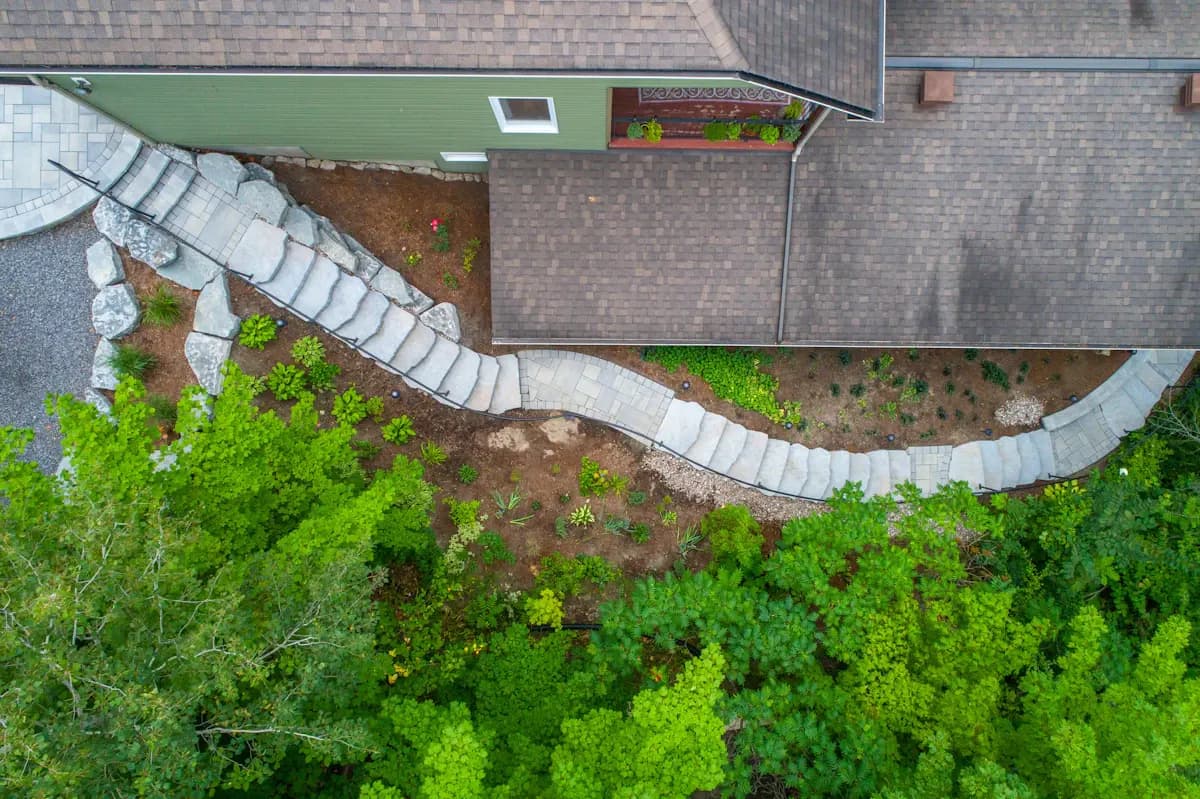
Take a 400 square foot patio on a lot that pools. Conventional: roughly $6,800 for the patio plus $1,000 to $3,000 for a French drain or catch basin with an outlet, per the site's cost table, so $7,800 to $9,800. Permeable: roughly $8,000 to $9,500 with the deeper reservoir and no separate drain. Over ten years the conventional patio needs joint sand and an occasional drain flush; the permeable patio needs its joints vacuumed and topped with clean stone two or three times, a few hundred dollars each.
The totals are close, often within a thousand dollars, and the permeable patio may earn a stormwater fee reduction or a permit approval the conventional one cannot. On a dry site the comparison is different: the conventional patio has no drain cost, and permeable is simply $1,000 to $2,500 more. The cost guide treats drainage as a scope line for this reason.
| Item, 400 sq ft on a wet lot | Conventional + drain | Permeable |
|---|---|---|
| Excavation and base | 6 in dense base | 10 – 12 in open-graded reservoir |
| Surface | 60 mm pavers, polymeric sand | PICP units, stone-filled joints |
| Drainage | French drain or basin, $1,000 – $3,000 | Included in base; underdrain if clay |
| Install estimate | $7,800 – $9,800 | $8,000 – $9,500 |
| Ten-year upkeep | Joint sand, drain flush | Joint vacuuming, stone top-up |
| Stormwater credit possible | No | Often |
Frost is not the problem people expect. An open-graded reservoir drains, so there is little water to freeze and heave; permeable pavers actually perform well in cold climates when the subgrade drains. Salt is the bigger cold-climate issue, because deicers pass straight into the ground; sand or a chloride-free product is preferred. Clay is the real limit: an infiltration test before design tells you whether the reservoir will empty in a day or two, which it must.
In the wettest climates the reservoir has to be sized for the storm, not the average, and roof runoff should not be directed onto it without calculation. In hot, dry climates permeable patios are used for a different reason, to recharge irrigation water and keep surfaces cooler, and clogging from dust is the maintenance issue. The regional page on this site covers the local stormwater rules that often decide the choice.
Buyers see a paver patio; few can tell permeable from conventional. The resale figures are therefore the same: NAR's 2023 report puts a modest paver patio at 95% recovery. Where permeable makes a difference is in what the buyer does not see: a documented stormwater compliance, a fee credit that transfers, and a patio that does not puddle on the inspection walk-through.
In municipalities with strict impervious cover rules, a permeable patio may also be the only patio that could be approved, and an approved patio is worth more than an unpermitted one. Fixr's 2025 expert survey found 98% of outdoor professionals saying updated outdoor space affects value; a dry, approved patio is the version of that they mean.

The common failures are all base and joint mistakes. Using dense-graded stone or sand in the base defeats the system; the reservoir must be open-graded, washed stone. Filling joints with polymeric or ordinary sand seals the surface. Skipping geotextile or a liner where the soil demands one lets fines migrate in and clog from below. Failing to protect the finished surface from muddy construction traffic clogs it from above before the patio is a month old.
Conventional installs on wet sites fail in their own way, by directing water to a drain that has no outlet, or to an outlet on the neighbor's side of the line. Whichever you choose, insist on a stated discharge point. The planning quiz includes a permeable question because so many proposals get the joint fill wrong.
A permeable bid should name the infiltration test result or the underdrain, the reservoir depth and stone gradation, the bedding stone, the joint stone, the edge restraint, any liner near the foundation and where overflow goes in a storm larger than the design. A conventional bid should name the base, bedding and joint sand as usual, plus the drain type, its depth, its outlet and how downspouts tie in. Either bid should say where water ends up in one sentence.
Ask permeable bidders whether they have installed the system before and whether they will provide the maintenance schedule in writing, since the joint vacuuming is what keeps the EPA's sediment removal figures true. The estimate request asks for the discharge point so proposals can be compared on it.
Homeowner polls
No votes yet. Yours will be the first. · saved on this device
Drainage is priced before the surface on every well-written proposal.
No votes yet. Yours will be the first. · saved on this device
Over years, yes, if fines wash in from adjacent lawn, mulch or sand de-icer. Vacuuming or blowing the joints clear every year or two, keeping mulch beds below the paver surface and using an edge restraint that stops soil migration keep them draining. A clogged system can be restored by removing and replacing the joint stone, which is far cheaper than rebuilding a conventional patio that floods.
Yes, with an impermeable liner and a pipe on the house side of the reservoir so infiltrated water is carried away from the foundation rather than allowed to soak beside it. Many designs also keep the last few feet nearest the house conventional and sloped away. A pro who has built permeable systems will raise this without prompting; one who has not may not.
Typically ten to twelve inches of open-graded stone for a patio, against six inches of dense base for conventional pavers, and more for driveways or where the design storm is large. The extra depth is the reservoir that stores rain while it infiltrates. On clay, an underdrain at the bottom carries water away when the soil cannot.
No. Polymeric sand hardens and seals the joints, which is the opposite of what the system needs. Permeable joints are filled with small, clean, angular stone that stays open. If a bid for a permeable patio lists polymeric sand, the bidder has not understood the system.
Every two to four years for a residential patio, more often under trees or where dust and mulch wash onto the surface. A shop vacuum or a landscape contractor's vacuum removes the top inch of clogged joint stone, which is then replaced with clean stone. Pressure washing pushes fines deeper and should be avoided. The EPA prices permeable interlocking pavers at $7 to $14 per sq ft to build and credits them with removing 67 to 81% of sediment; this cleaning keeps that working.
Only if it is designed to. Near a foundation the reservoir should have an impermeable liner on the house side and an underdrain that carries water away, otherwise it can store water against the wall. Conventional pavers sloped away from the house with a drain are often the safer choice within ten feet of a basement.
Rarely for the patio itself, but if you want a stormwater credit or an exclusion from impervious cover, the municipality will usually require plans and an inspection of the reservoir before it is covered. Ask the stormwater office before construction; a credit is hard to obtain after the base is buried.
Yes. Pervious concrete and porous asphalt exist and are used for driveways and parking. They are poured, not laid, and clog more easily than pavers because they cannot be vacuumed as effectively. For a residential patio, permeable interlocking pavers are more common and easier to maintain.
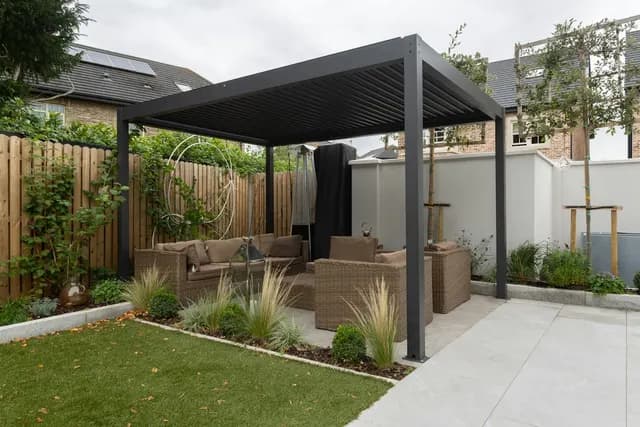 ComparisonConcrete pavers vs Poured concrete
Poured concrete is the cheaper patio at about 60 percent of a paver price and installs in days, but it cracks where the ground moves and cannot be spot-repaired.
 ComparisonConcrete pavers vs Natural stone
Concrete pavers cost less, come in consistent sizes and can be replaced from stock; natural stone costs more, varies in every piece and never fades or wears out when laid at the right thickness.
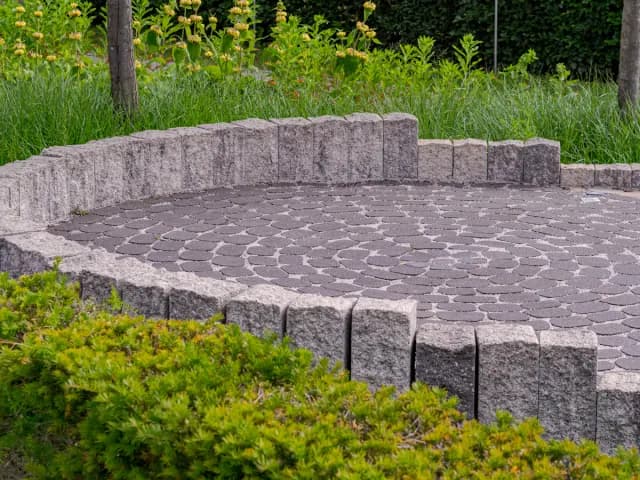 ComparisonSegmental concrete block wall vs Pressure-treated timber wall
A pressure-treated timber wall is the least expensive way to hold a low slope and can be built in a day, but it rots at the soil line in fifteen to twenty-five years.
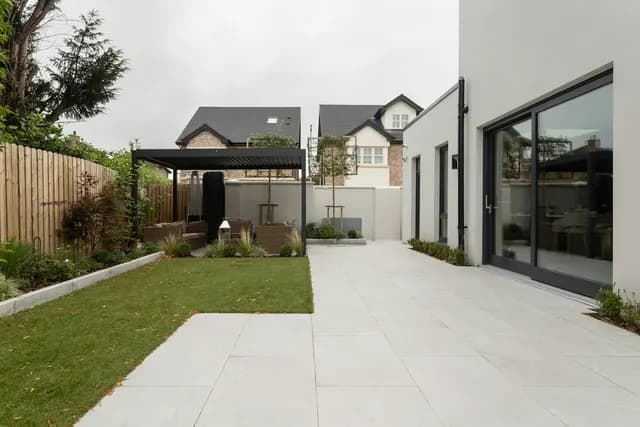 ComparisonNatural gas or propane fire feature vs Wood-burning fire feature
A gas fire feature lights instantly, makes no smoke or ash, is allowed where wood is banned and can sit closer to seating, but costs more to install because of the line and permit.
 Service guidePaver Patio Installation
Paver patio installation is the excavation, compacted stone base, bedding layer, laid pavers, edge restraint and joint fill that together create a level, drained outdoor surface.
 Service guideRetaining Wall Construction
Retaining wall construction turns a grade change into stable, usable ground with a footing, a wall of segmental block, stone, timber or poured concrete, and the drainage stone and pipe behind it.
 Service guideFire Pit & Fireplace Install
Fire pit and fireplace installation covers built-in wood or gas fire pits, masonry or prefabricated outdoor fireplaces, the non-combustible surface around them, gas or electrical lines and the clearances local rules require.
 Service guideWalkways & Driveways
Walkway and driveway work covers paths from the street or driveway to the door, garden paths, and vehicle surfaces in pavers, permeable pavers, concrete or stone.
 Service guideOutdoor Living Spaces
Outdoor living space planning coordinates patio, seating, cooking, shade, lighting, fire, paths, walls and planting into one plan that can be built at once or in phases.
 Free toolPatio cost calculator
Size, material tier and complexity in, a realistic budget range out.
 Free toolHardscape planning quiz
9 questions that show what you already know and what to check next.
 Free toolHardscape polls: how other homeowners are deciding
See what other planners chose and add your vote.
Tell us the size, the condition of what is there now, and what you want to change. Patio Scopebook passes your request to independent local professionals, who reply with written, no-obligation estimates. The service is free to use.